Get your personalized private tour of Alsace! Click Here!
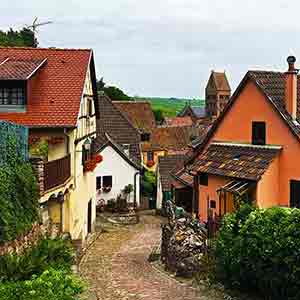
Adorable and Charming Villages in Alsace Accessible by Train
There are actually many more towns and villages in Alsace accessible by train, but I'm focusing more on the most picturesque of them.
The truth is 99% of all the villages in Alsace accessible by train are adorable and charming, but we can't see them all, so here are my favorites.
I chose villages and towns accessible by train in Alsace that:
- still have some of their medieval city walls and gates
- still have some medieval buildings
- have unique museums and exhibitions
- have a long history of wine making
- where interesting things happened
So all the villages in Alsace accessible by train on this list have medieval buildings, city walls, city gates, unique museums, wineries, vineyards, AND/OR interesting people and events.
Hopefully, they have it all (and many of them do).

Hi, I'm Suzele and I'm here to help you create a more interesting, one of a kind trip to Alsace France. There is a lot of useful information that you can use to plan your trip yourself... or... I can do ALL the work for you on a private tour made just for you!
Train Lines in Alsace
Southern Alsace
Mulhouse-Belfort Train Line
Mulhouse is the second largest city in Alsace. Its specialty is its museums. It has a world-class car museum, among others.
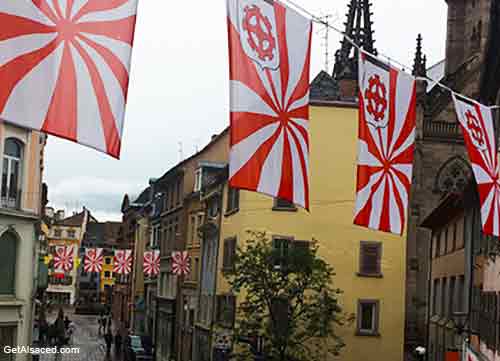
Altkirch is a smaller town in the Sundgau region of Alsace. It's built up a hill. The view from the top next to the city church is great. One of the local specialties in the Sundgau is fried carp.
Belfort is not actually in Alsace anymore, but its history is closely tied to Alsace. It's also a large and very interesting city with a beautiful old town as well as great museums and, of course, there is the Citadel...
Mulhouse-Cernay-Thann Train Line
Mulhouse is the second largest city in Alsace. Its specialty is its museums. It has a world-class car museum, among others.
Thann is the first stop on the Alsatian Wine Road in southern Alsace and is one the interesting villages in Alsace accessible by train. The 13th century collegiate church and the Engelbourg castle are worth checking out.
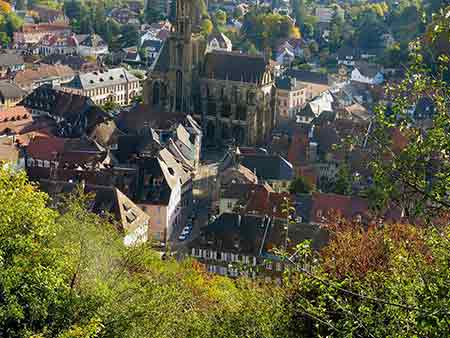
Cernay is right next to Thann and is also on the Wine Road. It's considered to be where Julius Caesar defeated Ariovistus and his Germanic tribe in 58 BC.
Mulhouse-Basel-Frick/Laufenberg Train Line
Mulhouse is the second largest city in Alsace. Its specialty is its museums. It has a world-class car museum, among others.
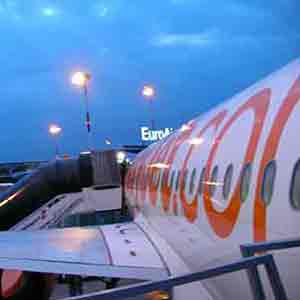
Saint-Louis is the last stop before you head into Switzerland. And it's also the closest train station to the Basel/Mulhouse airport. So it's not one of the most beautiful towns or villages in Alsace accessible by train, but it is a very important one. This is where you can catch the bus that links the Euroairport with the French trains. Good to know!
Basel is one of the larger cities in Switzerland. You can check out its 10th century church, the Munsterkirche, or just wander through the unbelievably well preserved medieval city center (very unusual for a city of this size). And if that's not enough, there's always the still-standing enormous late medieval city gate, the Spalentor.
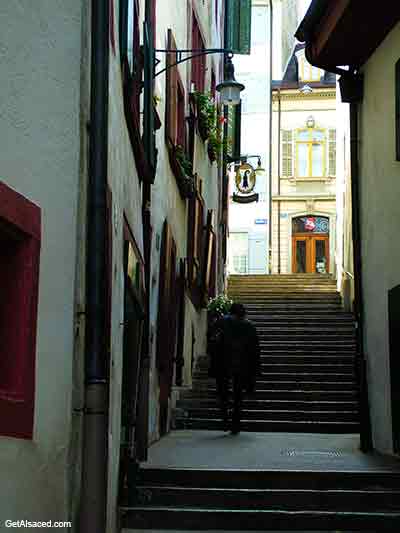
Kaiseraugst is a little village in Switzerland (just outside of Basel) with well preserved roman ruins. It's one of the few in the region that hasn't been completely destroyed.
North-South Alsace
Mulhouse-Colmar-Selestat-Strasbourg Train Line
Mulhouse is the second largest city in Alsace. Its specialty is its museums. It has a world-class car museum, among others.
Rouffach is a charming village on the Wine Road near Colmar. It's also one of the wine growing villages in Alsace accessible by train. You can find remains from the Celts, Romans, Franks here. It's been attacked, burned, and bombed from the 12th century to the 20th, but still a lot has survived. A great day trip.
Colmar is a small city with beautiful (mostly renaissance) homes. Unfortunately Louis XIV had its city walls torn down after the Thirty Years War.
Ribeauvillé is one of the more famous villages on the Alsatian Wine Road. So it is very charming. What you may not know is that (supposedly) the Kougelhopf, a well-known Alsatian cake, was first created here. This is one of the villages in Alsace accessible by train, but the train stop is about 2 miles from the village itself, so bring your walking shoes!
Selestat is a small and charming city that is said to be the birthplace of the Christmas tree. It's humanist library has books from as far back as the 7th century.
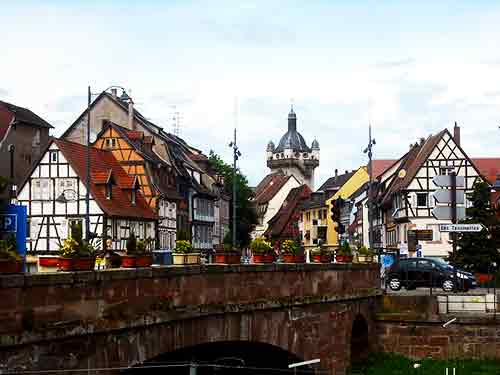
Strasbourg is the capital of Alsace and its largest city. The cathedral is gorgeous, but so is the Tanners' District La Petite France. If you think you have what it takes, you can climb the stairs to the top of the cathedral (over 300 steps).
Central Alsace
Colmar-Munster-Metzeral Train Line
Colmar is a small city with beautiful (mostly renaissance) homes. Unfortunately Louis XIV had its city walls torn down after the Thirty Years War.
Turckheim is a village on the Alsatian Wine Road near Colmar. It's one of the few villages that still has its city walls and gates. The nightwatchman patrols the streets of Turckheim every night at 10pm (May through October) singing traditional Alsatian songs. And it's one of the villages in Alsace accessible by train.
Munster is a small city famous for its Munster cheese. It's a very strongly flavored cheese. They've been making it in the same way since the 10th century.
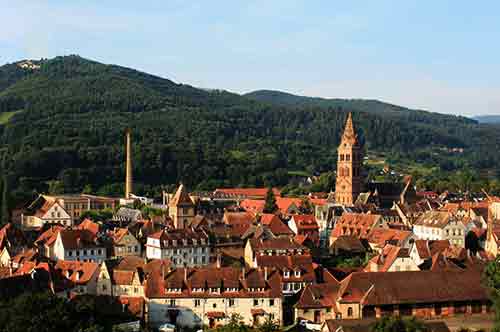
Northern Alsace
Selestat-Molsheim-Strasbourg Train Line
Selestat is a small and charming city that is supposedly the birthplace of the Christmas tree. It's Humanist library has books from as far back as the 7th century.
Scherwiller was the location of the very unpleasant end of the Peasants Revolt in 1529 where they were basically slaughtered. Two castles, the Ortenbourg and the Ramstein, are nearby too.
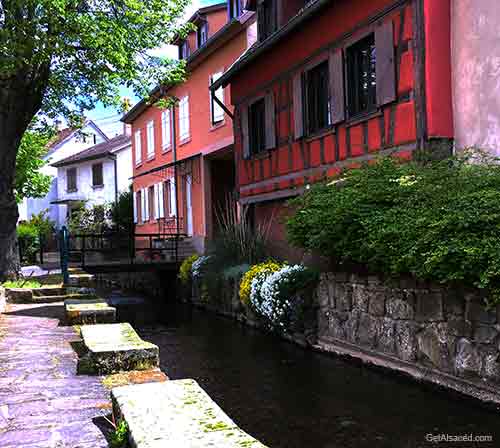
Dambach la Ville still has its medieval walls and gates and it's one of the wine growing villages in Alsace accessible by train. It's church, St Sebastien, is interesting. Look for the unusual sconces... St Sebastien is believed to protect people against the Plague.
Epfig, known to have existed since 762 AD, is a charming village on the Wine Road. One of France's larger chocolate manufacturers is based in Epfig too (chocolate and wine anybody?)
Barr is as charming as all the villages in Alsace accessible by train on the wine road, but with less tourists which can make it all the more enjoyable to visit if you're looking for a little peace and quiet.
Obernai is the birthplace of the patron saint of Alsace, St Odile. It has existed since at least 778. Its city walls and gates have survived a lot of conflict with 30 towers still standing.
Rosheim is a village on the Wine Road that still has its city walls and gates as well as a 12th century home which is considered to be the oldest in all Alsace. The train station is in Rosheim but it is about 2 miles from the center of town so be prepared to walk.
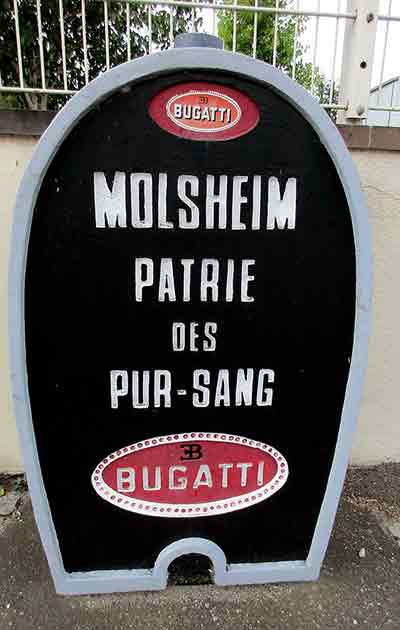
Molsheim is a one of the beautiful villages in Alsace accessible by train on the Wine Road with its walls and gates still intact. It was also the home of the Bugatti factory.
Strasbourg Entzheim Airport is a train stop at the village of Entzheim very near the Strasbourg airport. There is a shuttle there that can take you to the airport.
Strasbourg is the capital of Alsace and its largest city. The cathedral is gorgeous, but so is the Tanners' District. If you think you have what it takes, you can climb the stairs to the top of the cathedral (over 300 steps).
Strasbourg-Molsheim-Saales-St Dié Train Line
Strasbourg is the capital of Alsace and its largest city. The cathedral is gorgeous, but so is the Tanners' District. If you think you have what it takes, you can climb the stairs to the top of the cathedral (over 300 steps).
Strasbourg Entzheim Airport is a train stop at the village of Entzheim very near the Strasbourg airport. There is a shuttle there that can take you to the airport.
Molsheim is a one of the beautiful villages in Alsace accessible by train on the Wine Road with its walls and gates still intact. It was also the home of the Bugatti factory.
Mutzig is a tiny little village on the wine road in Alsace that is more famous for its beer (although its wine is very good too). The Kaiser Wilhelm II Fort that was built in the late 1800s is nearby.
Schirmeck is a small town in a valley in the Vosges mountains. It was the site of a Nazi Work Camp (or re-education camp as they liked to call it) and a very interesting museum about Alsace from 1870 to 1946 with a heavy focus on World War Two.
Rothau is an even smaller town in the Vosges mountains that is about 3 miles (a one hour walk) from the Struthof Concentration Camp Memorial. In fact if you walk from the train station, you’ll be walking the same path as thousands of concentration camp prisoners many years ago.
Haguenau-Obermodern-Saverne Train Line
Haguenau was a favorite village of Frederick Barbarossa (one of the Holy Roman Emperors). City walls, gates, and other buildings have survived. There's also an interesting Alsatian museum.
Neuwiller-les-Saverne houses the St Pierre and St Paul church which was founded in the 11th and 12th century. It was also one of the first churches in Alsace to be shared by Catholics and Protestants during the Reformation.
Saverne has plenty to see. The Rohan Palace has the Archaeology and History museums. There is a 14th century monastery and a 12th century castle too.
Strasbourg-Haguenau-Bitche Train Line
Strasbourg is the capital of Alsace and its largest city. The cathedral is gorgeous, but so is the Tanners' District. If you think you have what it takes, you can climb the stairs to the top of the cathedral (over 300 steps).
Haguenau was a favorite village of Frederick Barbarossa (one of the Holy Roman Emperors). City walls, gates, and other buildings have survived. There's also an interesting Alsatian museum.
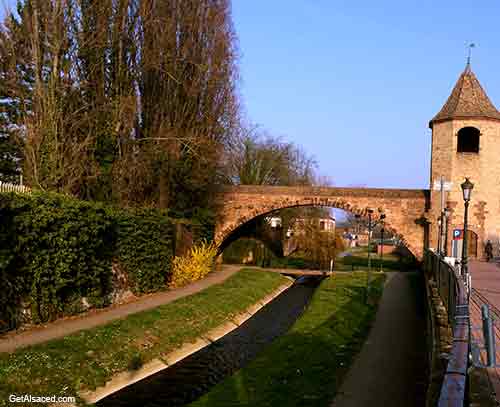
Niederbronn les Bains has been a spa town since roman times. The natural spring runs though the town where you can taste it at its source or visit one of its spas. You can also make short hikes to a number of different medieval castles nearby. And it's also one of the many charming villages in Alsace accessible by train.
Lichtenberg-Wimmenau-Ingwiller Train Line
Lichtenberg is part of the North Vosges Nature park and its 35 castle ruins. The Lichtenberg castle is in decent shape with buildings from the 13th century still standing. The Ingwiller train stop is the last one on this train line, then a TER shuttle will take you to Lichtenberg.
Strasbourg-Haguenau-Wissembourg-Neustad Train Line
Strasbourg is the capital of Alsace and its largest city. The cathedral is gorgeous, but so is the Tanners' District. If you think you have what it takes, you can climb the stairs to the top of the cathedral (over 300 steps).
Haguenau was a favorite village of Frederick Barbarossa (one of the Holy Roman Emperors). City walls, gates, and other buildings have survived. There's also an interesting Alsatian museum.
Hunspach is a very well cared for and preserved Alsatian village with many typical Alsatian homes and barns. The village is very proud of its heritage and the villagers often dress in traditional costumes for special occasions.
Riedseltz is a very small village that is a part of the Northern Alsace Wine Road. In fact it’s the only one with a train stop.
Wissembourg was founded in the 6th century by the Merovingian King Dagobert. It's truly a large medieval village with over 70 houses dating from before 1700 (many from the 14th and 15th centuries).
More Information on Train Travel in Alsace
How to Save Money Taking the Train in Alsace
Your Taking the Train in France Questions Answered